
UNESCO World Heritage Site
Located in northern Tanzania, Serengeti National Park is one of Africa’s most celebrated wildlife destinations. Its endless golden plains, scattered acacia trees, and dramatic skies offer more than just breathtaking views—they set the stage for one of the planet’s greatest natural spectacles: the annual Great Migration. This incredible journey of over a million wildebeest, zebras, and gazelles across vast landscapes is unmatched in scale and drama.
But Serengeti National Park is more than just migration. It is a year-round sanctuary for wildlife and a living tapestry of predator-prey interaction, traditional Maasai culture, and ecological balance. With over 70 large mammal species and 500 bird types, it’s an unforgettable experience whether you’re a photographer, conservationist, or simply an adventurous soul.
Serengeti National Park is located in northern Tanzania, bordered by the Ngorongoro Conservation Area to the southeast and Kenya’s Maasai Mara to the north. The park forms part of the larger Serengeti ecosystem, covering roughly 30,000 km², and is known for its vast savannahs, seasonal rivers, and acacia-dotted plains. Its central location makes it a key stop on the northern safari circuit, often combined with visits to Ngorongoro Crater, Lake Manyara, or Tarangire National Park.
Getting to Serengeti National Park is straightforward, with options for both air and road travel. Most travelers arrive via Kilimanjaro International Airport (JRO) or Arusha Airport, followed by a light aircraft flight to one of Serengeti’s regional airstrips—such as Seronera, Kogatende, or Ndutu. Road access is also possible through the Ngorongoro Area, though it requires a long drive (6–8 hours) on rough terrain. While more time-consuming, the overland journey offers scenic views and additional wildlife encounters en route.
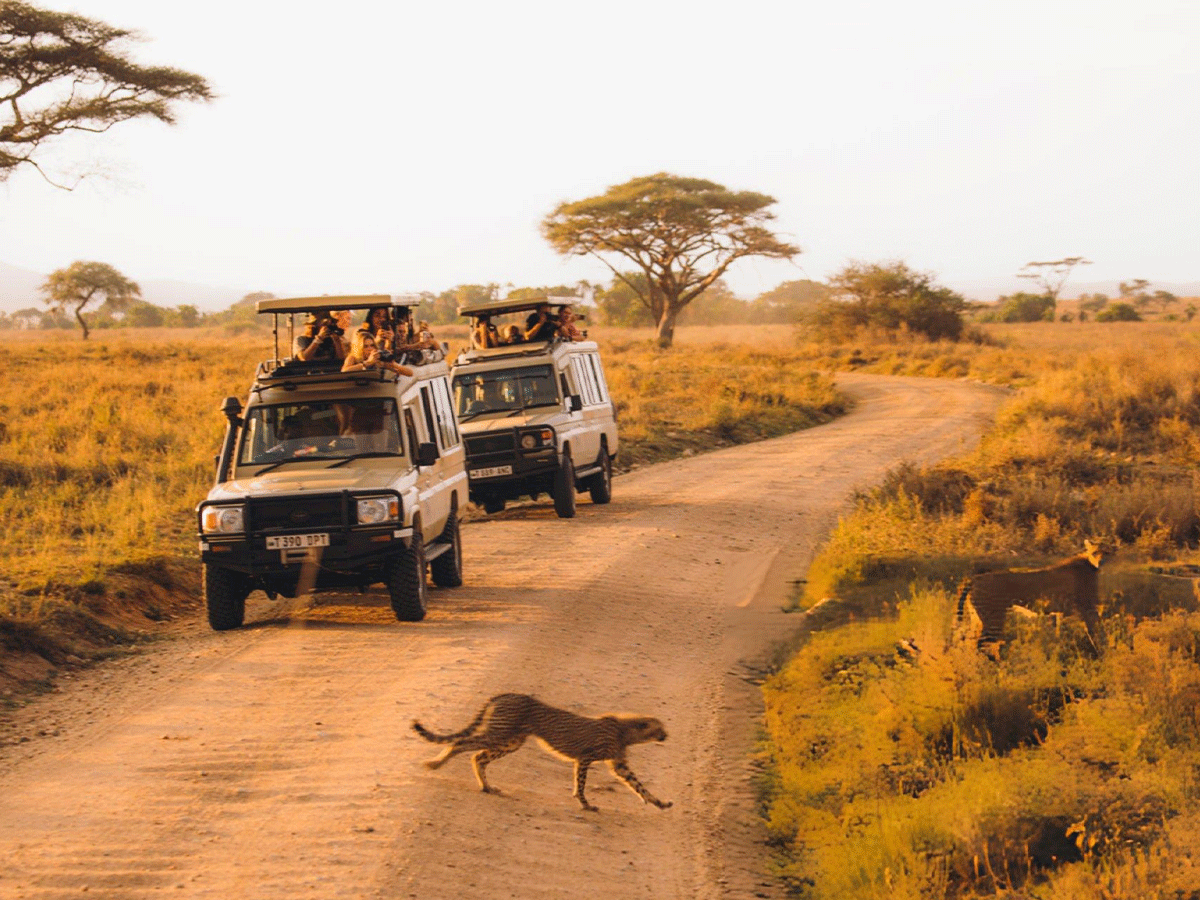
The Serengeti is home to the largest land-based animal migration on Earth—the Great Migration—featuring over 1.5 million wildebeests and hundreds of thousands of zebras and gazelles. Its vast, open landscapes support all Big Five species and high predator concentrations. The diversity of ecosystems (plains, river valleys, kopjes, and woodlands) ensures incredible wildlife viewing year-round, making it a standout safari destination globally.